The Empire of Austenasia

The Monarchy

“Uneasy lies the head that wears a crown.”

— William Shakespeare, Henry IV, Part 2

Imperator Johannes Karl I Augustus

6th Emperor of Austenasia

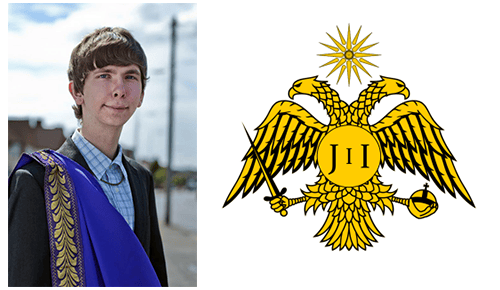
Johannes Karl I Augustus is the current Emperor of Austenasia, having ascended to the Throne and been crowned on 25 July 2026. His accession formally brought the Austenasian Interregnum to an end and restored the Crown as the constitutional centre of the Empire. His reign marks both the continuation of Austenasia’s monarchical tradition and the beginning of a renewed era of constitutional governance under the restored Crown.

As Emperor of Austenasia, Johannes Karl I Augustus also reigns as King of Angle-Saxons, creating a personal union between the Empire of Austenasia and the Angle-Saxish Kingdom. Although united in the person of their Sovereign, the two realms remain distinct and independent constitutional entities, each retaining its own institutions, laws, and governmental structures.

Johannes Karl I Augustus is a direct descendant of Harald Hardrada, the renowned King of Norway whose death at the Battle of Stamford Bridge in 1066 traditionally marks the end of the Viking Age. This ancestral connection complements the Emperor’s longstanding interest in history, an influence also reflected in the cultural traditions and identity of the Angle-Saxish Kingdom.

A committed Christian, Johannes Karl I Augustus has consistently affirmed the importance of the Christian faith in both his personal life and his public duties. As the reigning Emperor, he continues the longstanding Austenasian tradition of the Sovereign serving as a defender of the Christian faith and its values. In this respect, he follows the example of previous Austenasian Emperors, including Jonathan I Augustus, under whose reign Christianity remained an important element of the Empire’s constitutional and cultural identity.

Watch His Imperial Majesty's Coronation

About the Monarchy

The Austenasian Monarchy is the constitutional monarchy of the Empire of Austenasia, headed by the Emperor of Austenasia, who serves as Head of State. The Crown represents the continuity and constitutional authority of the Austenasian state.

Unlike hereditary monarchies based solely on birth, succession to the Austenasian Throne combines imperial nomination with constitutional oversight. The reigning Emperor may nominate an heir, whose position is subject to approval by the Senate. This system is designed to preserve the continuity and stability of the Crown while ensuring that succession remains accountable under the Constitution of Austenasia.

Crown Prince Stannius Caesar

Designated Heir to the Austenasian Crown

Stannius Caesar serves as Crown Prince of Austenasia and is the sole heir to the Imperial Throne. Appointed following the accession of Emperor Johannes Karl I Augustus in 2026, he bears the ancient title of Caesar, denoting his position as heir apparent.

As the only person in the line of succession, Stannius represents the continuity and future of the Austenasian Crown. He supports the Emperor in the ceremonial life of the Empire and works alongside the Imperial Government in upholding Austenasia’s constitutional institutions and traditions.

The Imperium

The Empire of Austenasia claims continuity with the Christian Roman Empire through the Imperium Doctrine, which holds that the Roman Empire never truly ceased to exist but has endured in different forms throughout history. Austenasia therefore regards itself as a modern continuation of the Roman State, and its Emperor as a successor to the Roman Emperors.

Developed during the reign of Emperor Esmond III Augustus, the doctrine forms the constitutional basis for Austenasia’s territorial claims and continues to shape the Empire’s symbolism, ceremonial traditions, and historical identity.

Previous Emperors of Austenasia

The Austenasian Crown has served as the constitutional head of the Empire since its foundation in 2008. Learn about the reigning Emperor, the Imperial tradition, and the monarchs who have shaped the Empire.

I. Terry I Augustus

Reigned: 20 September 2008 – 16 February 2010

(1 year, 4 months, and 27 days.)

As the first Monarch of the Empire and one of its two de facto founders, Terry I Augustus played a pivotal role in establishing Austenasia. Although he served as Head of State, his son, Crown Prince Jonathan, the Prime Minister, exercised most executive authority during his reign, leaving Terry I to fulfil a largely ceremonial role.

An enthusiastic supporter of the idea of his family possessing its own sovereign state, Terry I nevertheless regarded his duties primarily as those of guidance and oversight. Rather than involving himself in the day-to-day administration of government, he preferred to supervise and support his son’s leadership of the nation.

II. Esmond III Augustus

Reigned: 16 February 2010 – 20 September 2011

(1 year, 7 months, and 14 days.)

Esmond III Augustus served as the second Emperor of Austenasia. Originally second in the line of succession, he unexpectedly ascended the Throne following the abdication of Terry I and the refusal of Crown Prince Jonathan to become Monarch. His accession sparked the Austenasian Civil War, which ended in his victory.

An active and ambitious ruler, Esmond expanded the influence of the Throne, oversaw significant territorial growth, and developed the Imperium Doctrine. Following a Vote of No Confidence in 2011, his executive powers were removed, and his reign formally ended with the adoption of the Constitution of 2011.

III. Declan I Augustus

Reigned: 19 December 2010 – 20 January 2013

(2 years, 1 month, and 1 day.)

Declan I Augustus was the third Emperor of Austenasia, initially co-ruling with Esmond III before becoming sole Monarch following the enactment of the Constitution of 2011.

Declan became joint Emperor through an Act of Parliament after exploiting tensions between Esmond III and Crown Prince Jonathan, securing the latter’s support by pledging to moderate the influence of the former. With the adoption of the Constitution of 2011, Declan I became sole Emperor and presided over a significant expansion of the legal powers of the Throne.

IV. Jonathan I Augustus

Reigned: 20 January 2013 – 29 September 2024

(11 years, 8 months, and 9 days.)

Jonathan I Augustus, the son of Emperor Terry I, was the longest-serving Monarch in Austenasian history, with a reign of more than eleven years. As Crown Prince, Jonathan had originally been expected to succeed his father upon Terry I’s abdication in 2010, but declined the Throne, leading instead to the accession of Esmond III.

His eventual reign was generally regarded as a period of stability, continuity, and administrative development. Under Jonathan I, Austenasia experienced sustained growth and institutional consolidation, helping to shape many of the constitutional and governmental structures that continue to define the Empire today.

V. Aggelos I Augustus

Reigned: 29 September 2024 – 3 June 2025

(8 months and 5 days.)

Aggelos I Augustus succeeded Jonathan I Augustus following the latter’s abdication, ending the longest reign in Austenasian history.

His own reign, lasting just eight months and five days, was the shortest on record. Following a constitutional crisis in 2025, he was deposed for breaching the Constitution and refusing to answer to the Senate.

His removal marked the beginning of an Interregnum, which ended with the restoration of the monarchy under a revised Constitution in 2026.